Work redesign that turns transformation into action
Understand how work needs to change, redesign roles and processes, and execute workforce transformation with confidence.
Trusted by global enterprises









From analysis to action: the gap that stalls transformation
AI, disruption, competition and supply chain pressure are changing work faster than most organizations can keep up. AI has made one thing urgent: transformation has to start with the work.
Yet conversations are still stuck on efficiency estimates, cost cuts and headcount targets. There are more ways than ever to analyze roles and estimate automation potential. But more analysis doesn’t mean decisiveness.
While 92% of organizations have invested in AI, 78% say initiatives have stalled or failed. Most can’t turn investment into value because they don’t treat it as a work and workforce transformation challenge.
- Analysis is plentiful; decisions are not
- Transformation programs still start with the org chart, headcount or cost targets
- Few understand how activities, processes and accountabilities will change
- Without that, work can’t be redesigned and value isn’t captured
The real questions are: What work is changing? How should it be redesigned? Who should do it in future? And how does it shape organizational design and workforce planning?
Work redesign for AI: Why transformation has to start with the work
Want to know more?
Most organizations start with the workforce.
We start with the work.
Orgvue connects the work to the workforce. Map activities to people and positions, see how work flows across end-to-end processes, and understand how time is spent, what it costs and where change can be applied.
Then turn insight into decisions. Model changes such as AI, automation, outsourcing or offshoring at the value stream level. The impact flows in real time to FTE, cost and org structure, giving you a structured path from impact assessment to scenario modeling and ROI validation.
And we’ve been doing it for 15 years.
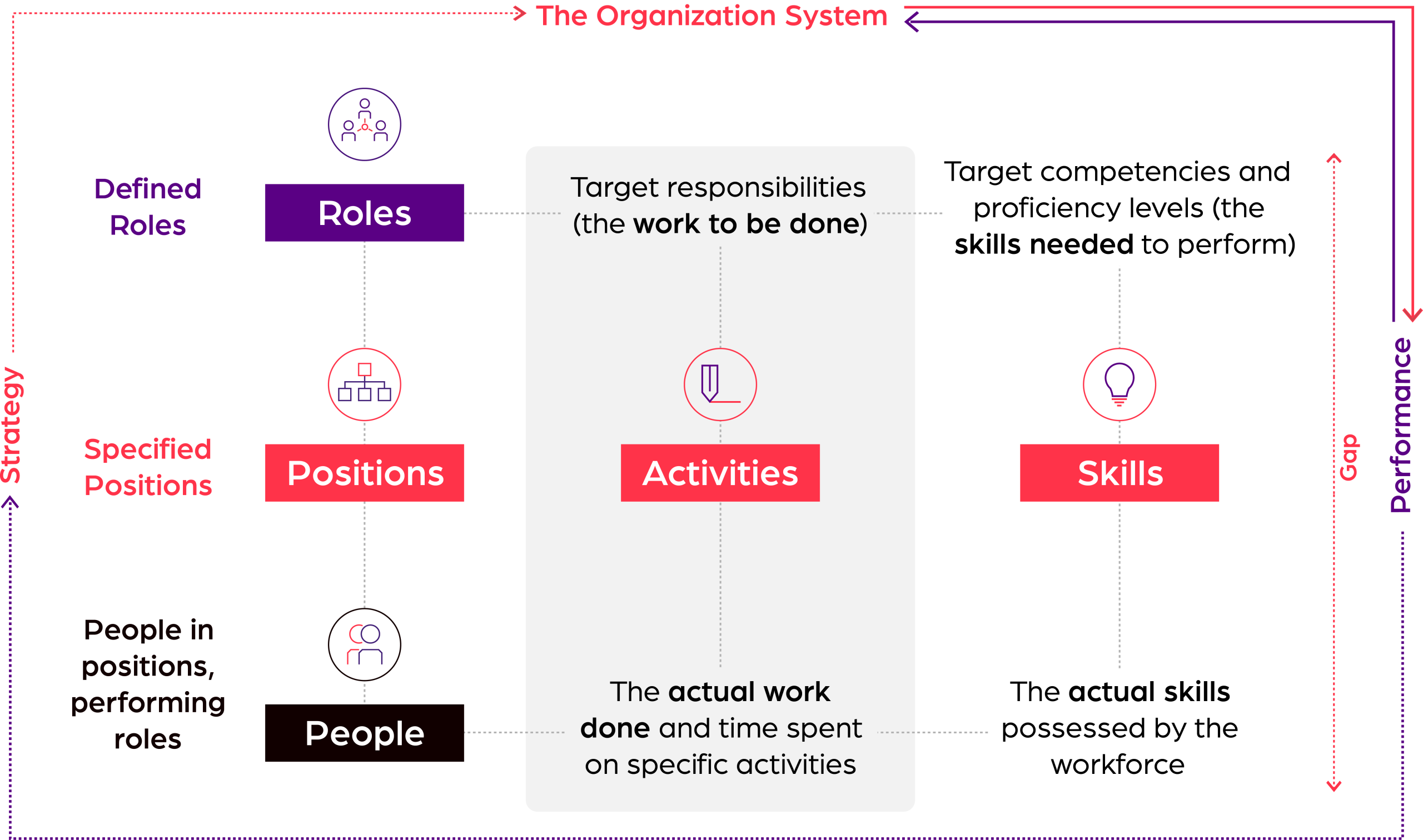
Diagram showing the flow of the Organization System
Why leaders choose Orgvue
for work redesign
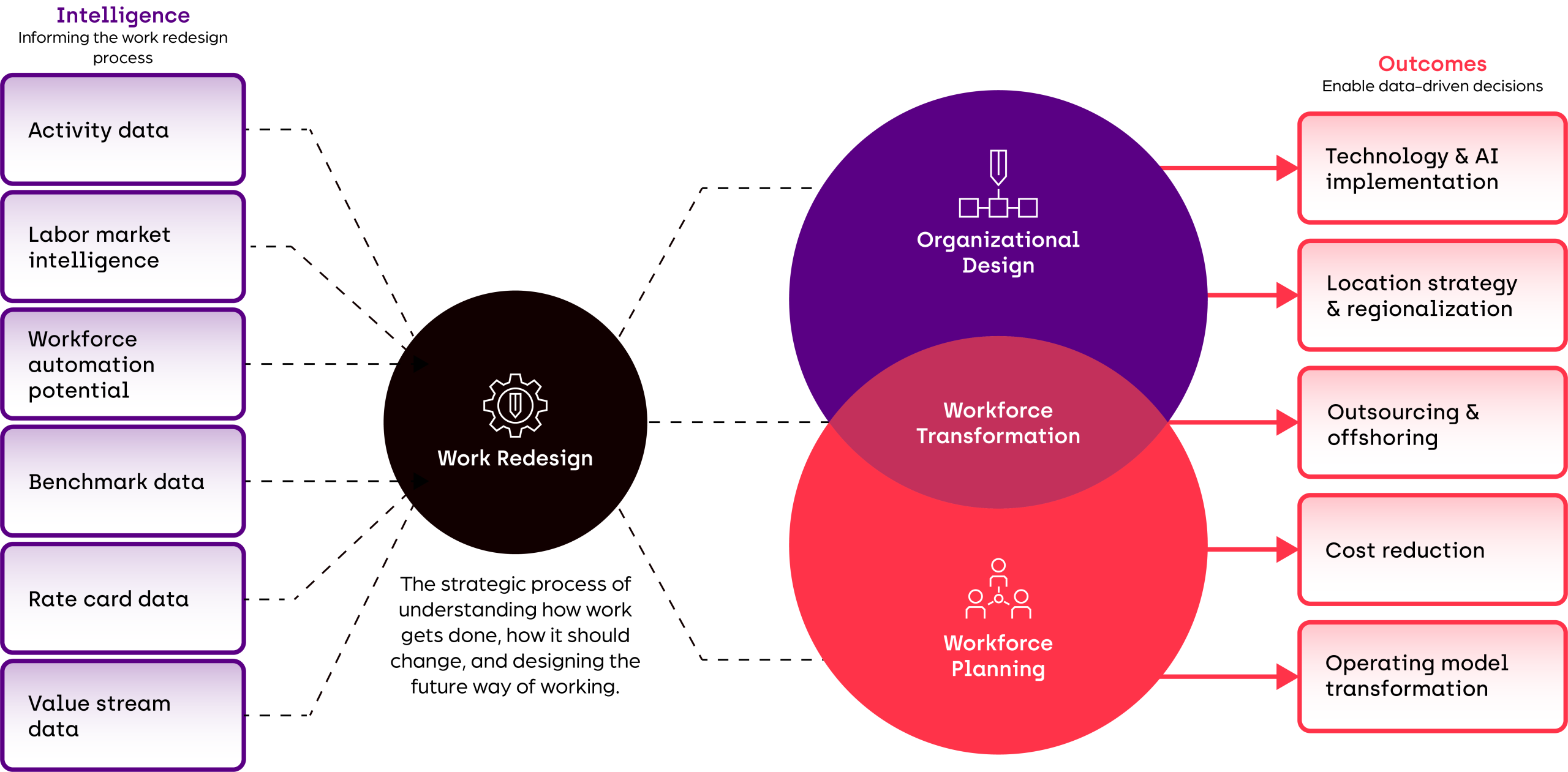
Diagram showing how work redesign drives workforce transformation
By mapping activities to people and positions and visualizing how work flows across end-to-end processes, Orgvue shows how work is performed, how much it costs, and where change can be applied.
By modeling the impact of change such as automation, outsourcing, or offshoring on roles, teams, and cost, Orgvue connects strategic planning to organizational reality to deliver tangible outcomes.

Work-first architecture
Redesign begins at the activity and value stream level, not from the org chart downward.

Connected modeling
Changes in work link directly to workforce, cost, and organizational impacts.

Decisioning framework
The platform does not simply surface data; it supports structured impact assessment, scenario modeling, and ROI validation.
Work redesign lays the foundation for workforce planning and organizational design. It creates a clear path from how work gets done today to the organization you need tomorrow.
And it’s not just about AI. Cost reduction, location strategy, outsourcing, offshoring and operating model change all depend on understanding how work needs to change first.
Changing approach isn’t easy, but it’s necessary. You need technology built with work at its heart.
Using Orgvue’s WebMCP to maximize
your work redesign process
Orgvue’s WebMCP connects your trusted AI agent directly to Orgvue, so you can ask workforce modeling questions in plain language and get trusted answers grounded in your data.
- Can you look at my value streams and identify candidates for work redesign?
- Now look at options for these activities and model them in Orgvue.
The result? A faster, more scalable organizational design process, extending modeling capability beyond specialist teams while keeping humans in the loop, access controlled, assumptions explicit, and outputs tied to a clear decision record.
How Orgvue’s work redesign software works
Build the data foundation
Analyze activities to understand FTE and cost allocation, who performs the work today, and how work is distributed across people, roles and value streams.
Answer questions such as:
- What work is being performed, by whom and at what cost?
- How is time allocated across activities?
- How does work flow across the organization?
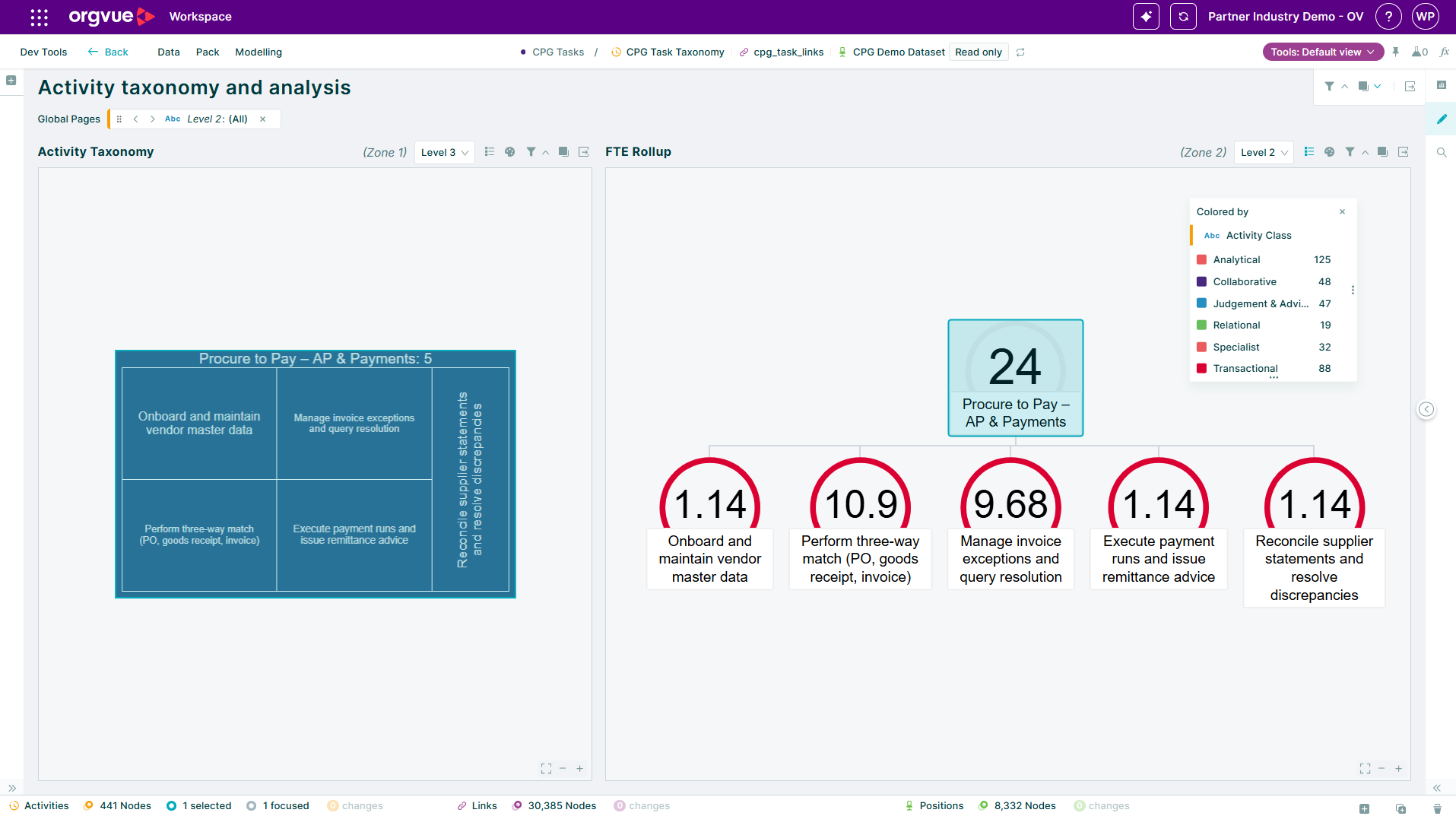
Understanding the work performed today
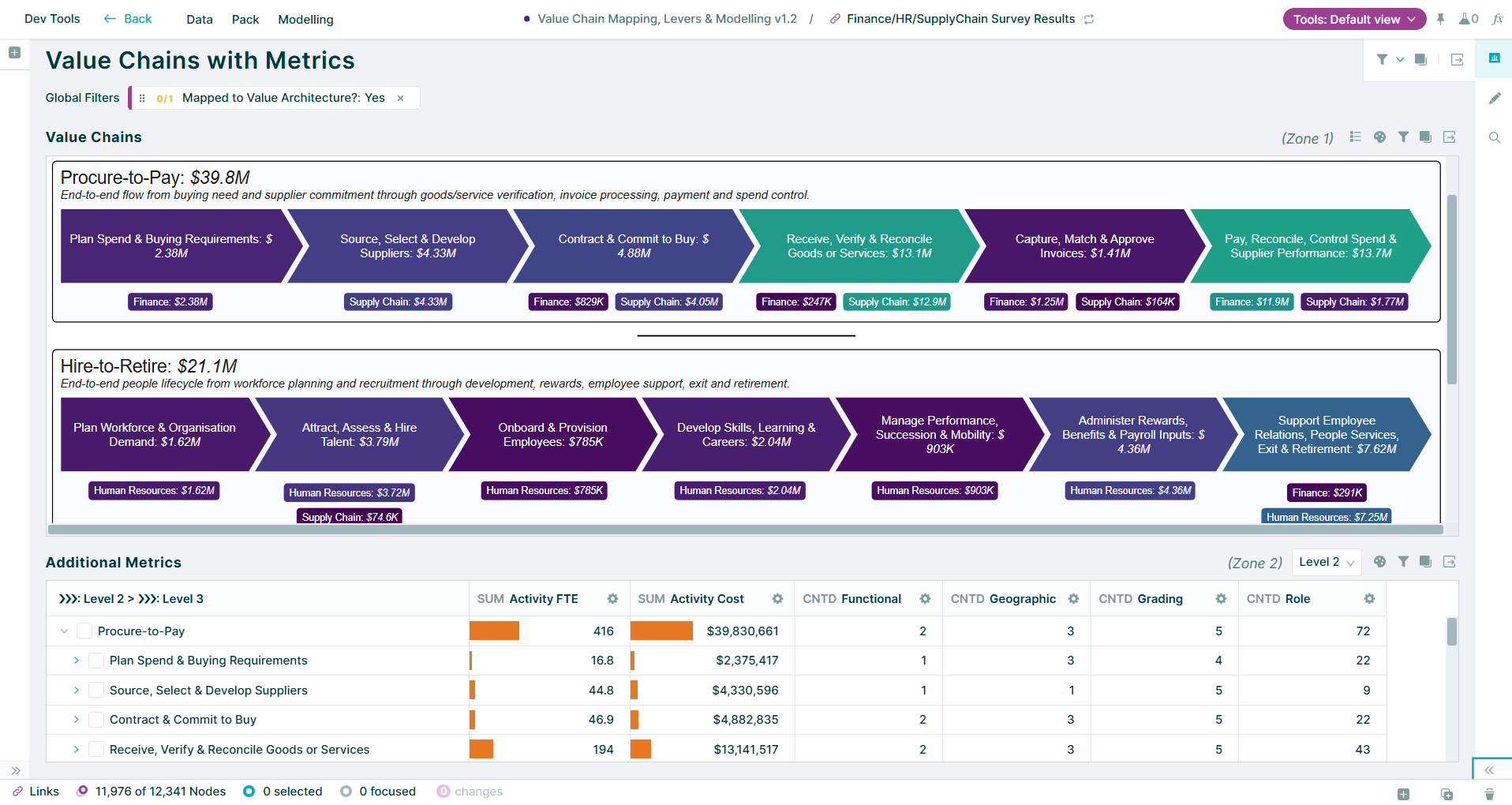
Visualize value streams
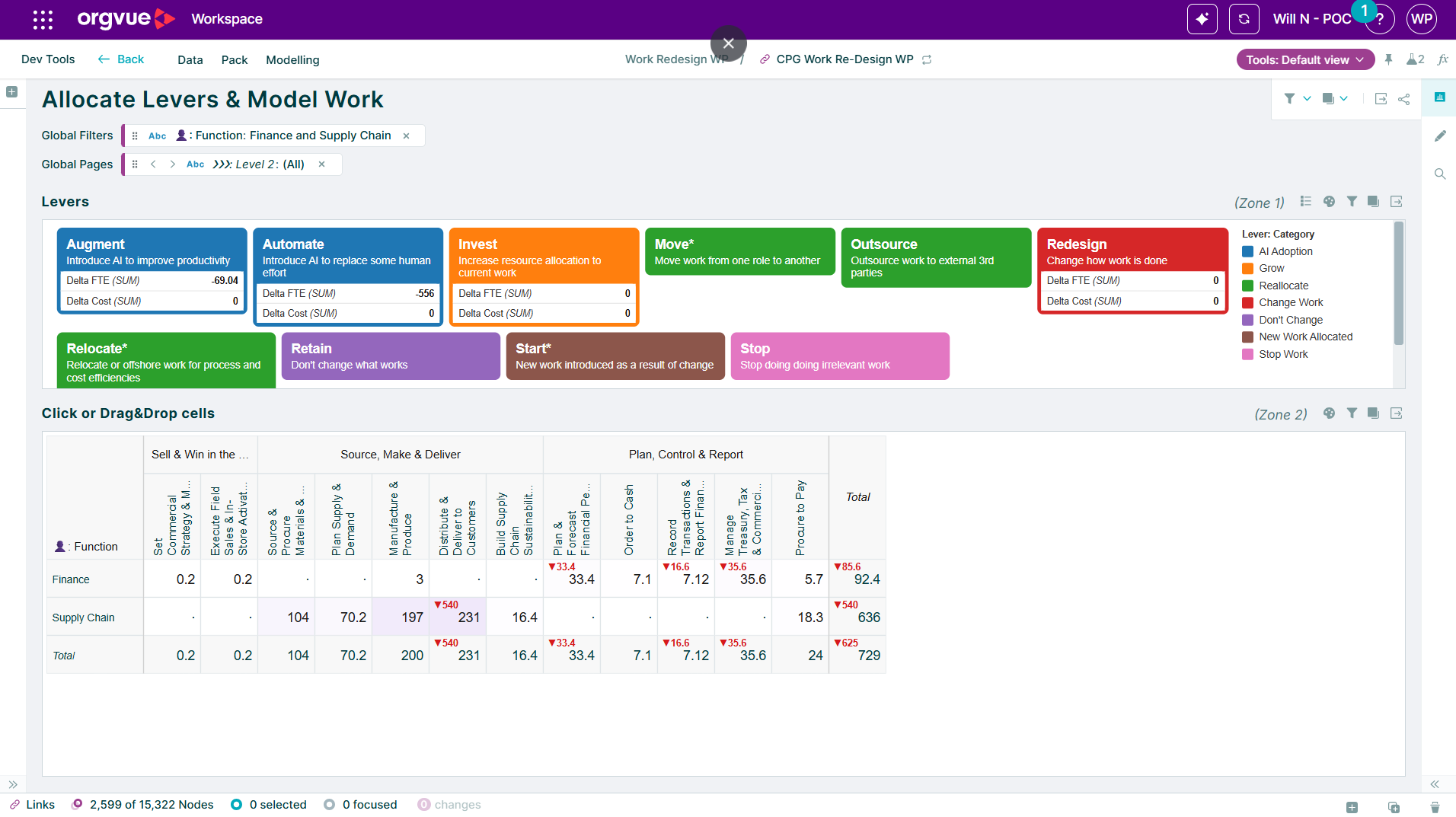
Assign levers to work
Redesign the work
Apply transformation levers such as automation, AI, outsourcing, offshoring and work reallocation at the activity level. Model changes and analyze their FTE and cost impact.
Answer questions such as:
- Which activities should be automated, augmented, offshored/outsourced, or removed?
- How should work flow in the future?
- What will the FTE and cost impact be?
Want to see this applied to your organization?
Redesign roles
Model impacts to roles, reallocate work where appropriate, and quantify productivity gains and future workforce requirements.
Answer questions such as:
- Which roles will be affected?
- How should activities be reallocated?
- What are the target FTE and cost by role across the organization?
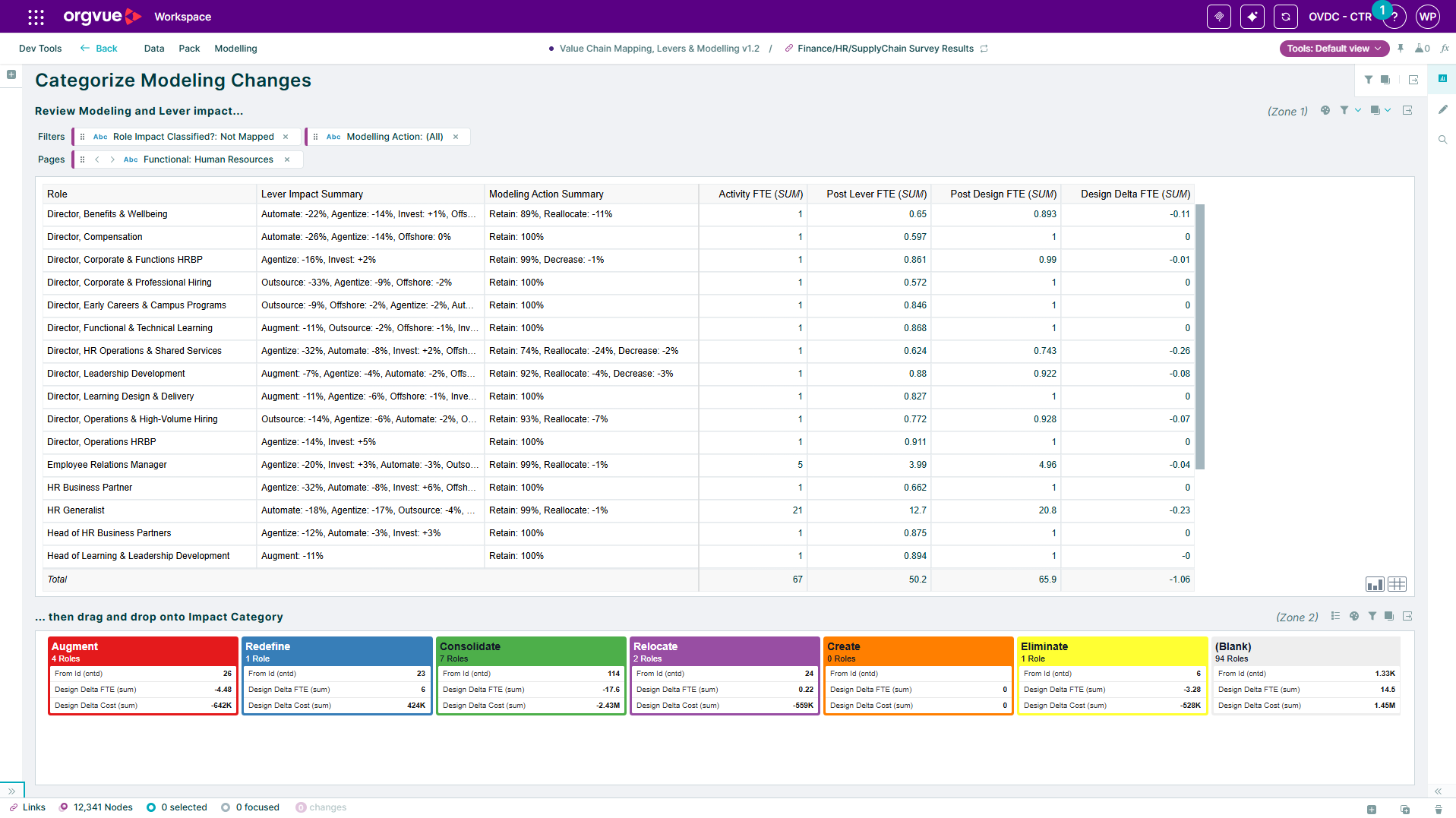
Decide on role-level impacts
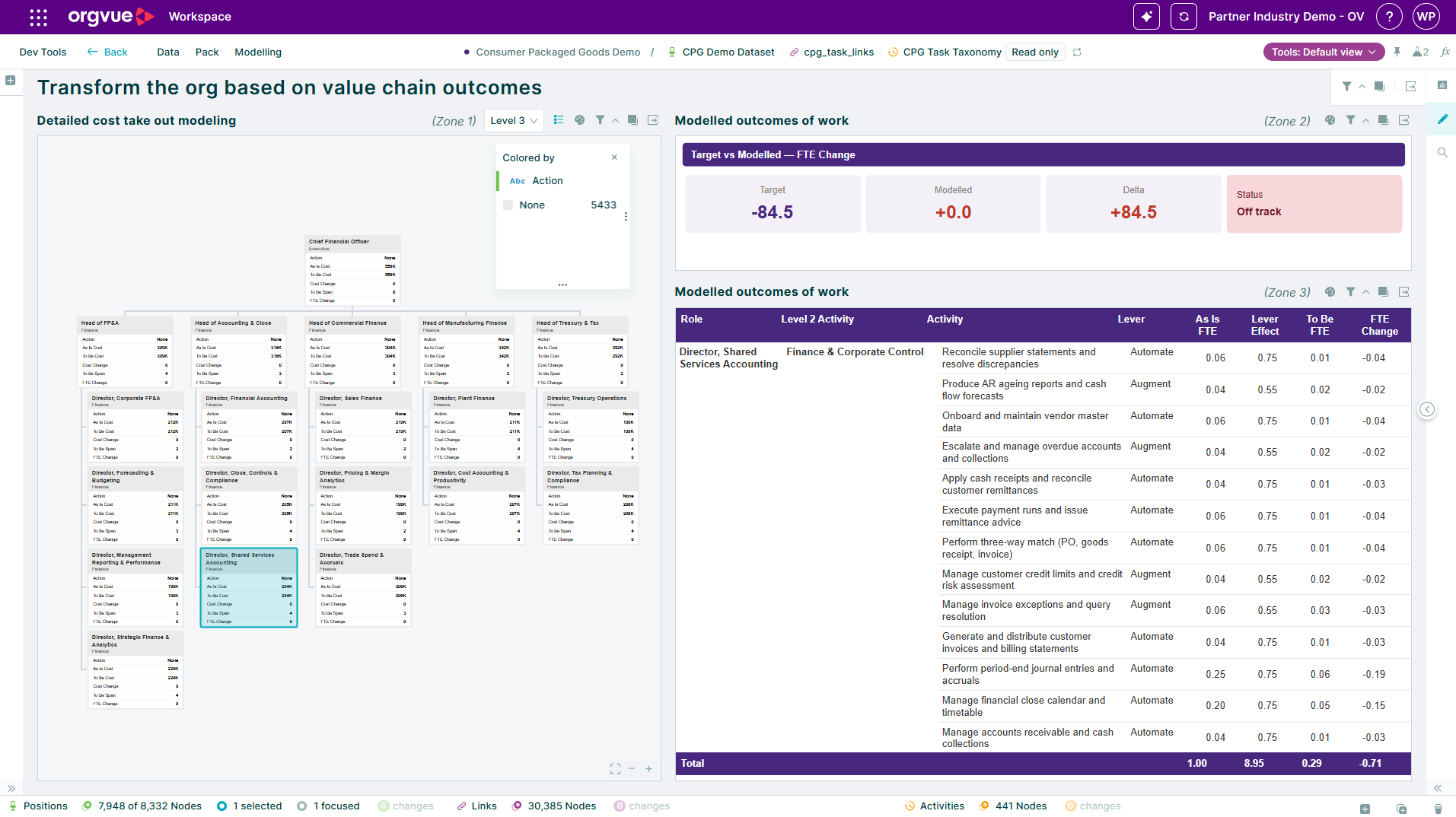
Linking back to workforce planning and organizational design
Connect to organizational design and workforce planning
Translate changes to activities and roles into workforce demand. Model the future-state organization and validate whether the proposed changes deliver the intended outcomes.
Answer questions such as:
- What roles, skills and FTE will be required?
- How should the future workforce be structured?
- Does the future-state model deliver the expected return?
Plan and monitor implementation
Sequence change, connect technology dependencies to the workforce plan, visualize ROI over time and monitor workforce changes.
Answer questions such as:
- In what order should changes be implemented?
- What dependencies could affect delivery?
- Are the changes delivering the expected outcomes?
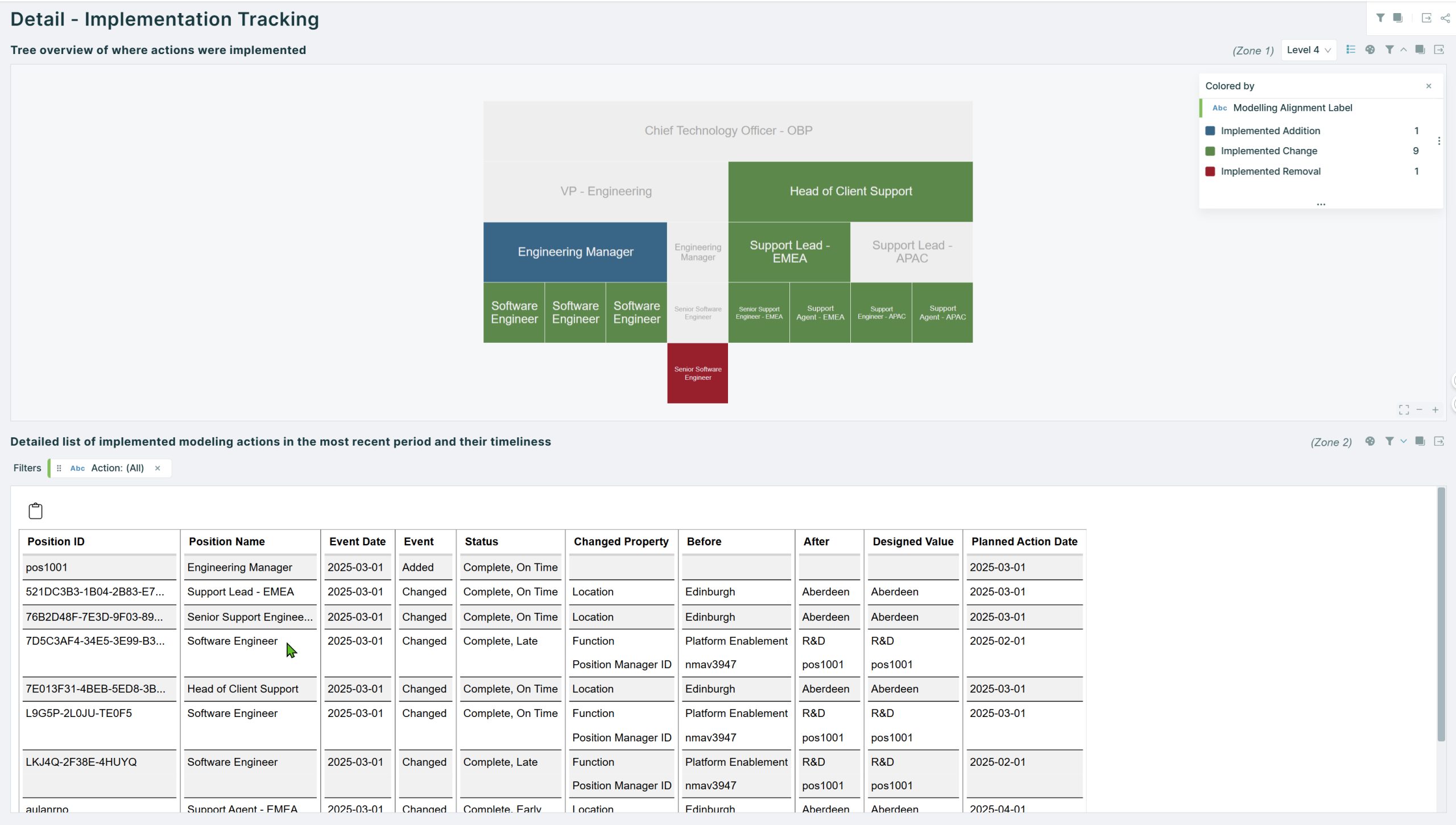
Detailed implementation tracking
Ready to see Orgvue in action?
In a personalized demo session, discover how Orgvue can help you:
- Understand workforce impacts before restructuring
- Compare multiple operating model scenarios
- Find critical skill gaps across the organization
- Align workforce plans to business strategy
- Accelerate AI workforce transformation
Trusted by global enterprises
“Orgvue’s automated role-clustering capability will save a huge amount of time in surfacing opportunities for organizational redesign, workforce planning, and cost reduction. What we’ve seen so far is truly game changing for design work.”
Stacy Anderson, Salesforce
Get your personalized demo
30-minute discovery call
Demo tailored to you
See our privacy notice. You can unsubscribe from marketing at any time by writing to us at [email protected].
Not ready for a demo? Explore more…


FAQ: Work redesign
Work redesign is the strategic process of understanding how work gets done today, determining how it should change in the future, and assessing the impact of those changes on roles, workforce requirements, costs, and the operating model. By starting with activities, processes, and value streams rather than the org chart, organizations can make informed decisions about automation, AI adoption, outsourcing, location strategy, and workforce transformation, creating a clear bridge between transformation strategy and execution.
Most transformation programs focus on workforce, cost or organizational outcomes without first understanding how the underlying work needs to change. As a result, organizations often struggle to move from insight to action. Work redesign provides the missing link between transformation strategy and execution by identifying how activities, processes and accountabilities should evolve, creating a clear foundation for workforce planning, organizational design and implementation.
Organizational design and workforce planning answer questions about structure, roles and capacity. Work redesign answers the more fundamental question of what work needs to be done in the future and how it should be delivered. Without understanding how activities, processes and value streams will change, organizations risk designing structures and workforce plans based on assumptions rather than evidence. Work redesign provides the work-level foundation for these decisions, ensuring that organizational design and workforce planning are aligned to the future needs of the business rather than the way work is done today.
Activity modeling is the process of simulating how work will change in the future by applying assumptions such as automation, AI augmentation, outsourcing, offshoring, or process improvements at the activity level. Rather than estimating workforce impacts at a high level, organizations can model changes to specific activities and workflows, understand how work will be redistributed, and quantify the resulting workforce, cost and organizational implications. This provides an evidence-based foundation for work redesign, organizational design and workforce planning.
Orgvue provides a work-first approach to transformation by helping organizations understand how work is performed today, model how activities and processes should change in the future, and quantify the workforce, cost and organizational impacts of those changes. By connecting activity-level analysis with scenario modeling, role design, organizational design and workforce planning, Orgvue helps organizations move from understanding work to making evidence-based transformation decisions.
The work redesign process in Orgvue has five steps: build the data foundation (who does what work, at what cost); redesign the work by applying transformation levers at activity level; redesign roles and quantify productivity gains; connect to organizational design and workforce planning to model the future-state organization; and plan and monitor implementation, sequencing change and tracking ROI over time.
No. AI has brought the need to start with work to the forefront and made it more urgent, but the same applies to cost reduction, location strategy, outsourcing and offshoring, operating model transformation, or any other transformation initiative. They all depend on understanding how work needs to change first.
Orgvue’s WebMCP allows AI agents to access and analyze workforce and work data held in Orgvue, helping teams explore work redesign scenarios more quickly and at greater scale. By providing access to activity, workforce, organizational and modeling data within Orgvue, AI agents can help users understand how work is performed today, investigate how activities might change, and assess the workforce and organizational implications of different transformation scenarios. Orgvue remains the trusted system for workforce data, modeling, governance and auditability, while the AI agent helps users interact with that information to support work redesign decisions.