Media and entertainment workforce transformation
Build the workforce that flexes across productions, platforms, and portfolios

Trusted by global enterprises










An industry entering a more disciplined phase of growth
After years of expansion driven by digital platforms and content proliferation, media and entertainment companies are operating in an environment shaped by tighter economics and changing audience behavior.
Across the sector, several forces are changing how these organizations run, including:
- Mergers and acquisitions are reshaping portfolios and increasing structural complexity
- Rising production costs and uneven performance are driving more disciplined investment
- AI is becoming embedded across the content value chain, particularly in pre- and post-production
For many, these dynamics trigger rapid, event-based change. Cost and productivity programs. Restructuring. Portfolio realignment. Necessary responses to real conditions, but not always designed to create lasting advantage.
Others are building transformation as a capability, not a reaction. They are becoming an intentional enterprise.
Trends influencing the media and entertainment market
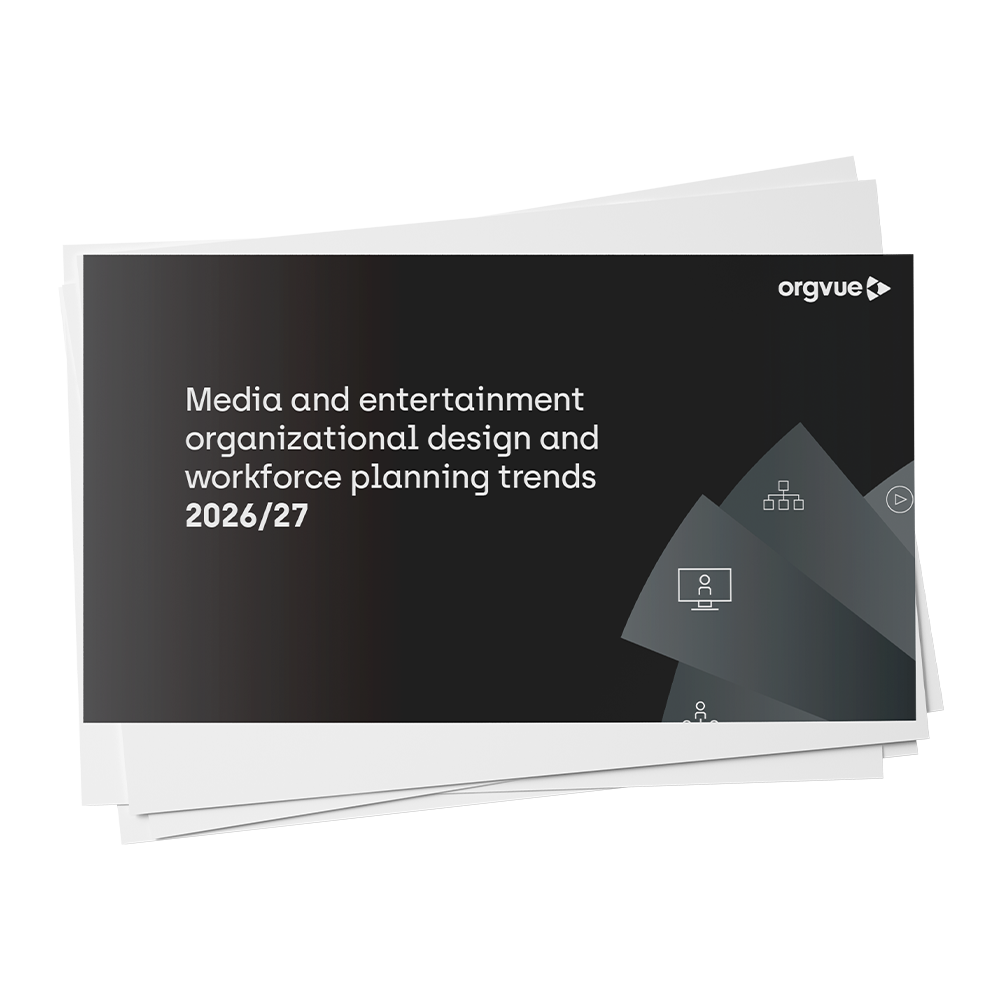
Download our ebook to explore these forces and others, and what they mean for workforce and organizational decisions.
Media and entertainment trends
Make workforce transformation continuous with Orgvue
Orgvue helps organizations move beyond one-off change and build workforce transformation as an ongoing capability. Its workforce intelligence platform, supported by advanced features and expert guidance, gives leaders the clarity to understand impact, test options, and adapt decisions over time as conditions change.
- AnalyzeSee exactly where cost, capability gaps, and transformation risk sit across your workforce
- DesignCompare future-state organization scenarios and assess impact before committing resources
- PlanUnderstand the skills you’ll need, the talent you already have, and the fastest path to readiness
- MonitorMaintain continuous workforce intelligence as demand, priorities, and conditions evolve

Simplify workforce
analysis and design
with Henshaw AI
Henshaw brings AI into Orgvue to reduce the manual effort behind key decisions. By automating time-consuming steps in workforce design, capabilities like Henshaw Assistant and Henshaw Roles help teams gain clarity and explore options sooner.
Media and entertainment
organizations in practice
These examples show where Orgvue has been used to support real workforce change.
Customer transformations

How two global media organizations integrated their workforces after a major acquisition

How the European Broadcasting Union built a future-proof competency framework
Ready to see Orgvue in action?
In a personalized demo session, discover how Orgvue can help you:
- Understand workforce impacts before restructuring
- Compare multiple operating model scenarios
- Find critical skill gaps across the organization
- Align workforce plans to business strategy
- Accelerate AI workforce transformation
Trusted by global enterprises
“Orgvue’s automated role-clustering capability will save a huge amount of time in surfacing opportunities for organizational redesign, workforce planning, and cost reduction. What we’ve seen so far is truly game changing for design work.”
Stacy Anderson, Salesforce
Get your personalized demo
30-minute discovery call
Demo tailored to you
See our privacy notice. You can unsubscribe from marketing at any time by writing to us at [email protected].
Not ready for a demo? Explore more…


FAQ: Media and entertainment workforce transformation
In media and entertainment, workforce transformation means reshaping roles, skills, structures, and operating models so the organization can flex across productions, platforms, and portfolios. The aim is a workforce that can handle tighter economics and changing audience behavior and still deliver great content.
The main pressures are mergers and acquisitions reshaping portfolios and adding structural complexity, rising production costs and uneven performance pushing more disciplined investment, and AI becoming part of the content value chain, especially in pre- and post-production. Each of these changes how work is organized and which capabilities organizations need.
Cost programs, restructures, and portfolio realignments respond to real pressures, but they rarely create lasting advantage on their own. Building transformation as an ongoing capability lets organizations keep adjusting structures, skills, and costs as audiences, platforms, and economics change.
AI is becoming part of the content value chain, particularly in pre- and post-production. Organizations need to know which activities can be automated or augmented, which creative and technical skills will matter more, and how roles should be redesigned to get real value from AI.
Bringing workforce data from each business into a single view helps leaders compare structures, find overlapping roles, standardize job architecture, and understand cost implications. This supports faster, more controlled integration and a simpler future-state organization.
Seeing where workforce cost and effort sit across productions, platforms, and functions shows where resources are duplicated or misallocated. Leaders can then redirect investment toward the content and capabilities that perform best.
Flexibility depends on a clear view of the skills the organization has, where those skills sit, and how they can be redeployed. With that view, leaders can move talent between productions, platforms, and portfolios as priorities change, instead of restructuring each time.
A competency framework defines the skills, knowledge, and behaviors roles need, along with the expected proficiency levels. In a fast-changing industry, it helps organizations spot emerging skills gaps, plan development, and keep their workforce ready for new formats and technologies.
Orgvue gives media and entertainment leaders a single view of workforce cost, capability, and structure. Teams can analyze transformation risk, compare future-state organization scenarios, plan for future skills needs, and keep monitoring workforce changes as conditions evolve.
Henshaw AI cuts the manual effort in workforce analysis and design. Henshaw Assistant answers workforce questions in plain language, and Henshaw Roles groups position data into role clusters. Together they help teams get clarity and explore organizational options sooner.