Financial services workforce transformation
Build the workforce that keeps money, data, and decisions moving

Trusted by global enterprises












An industry operating in full view
Financial services and insurance firms sit at the heart of how economies function. They enable how people save, invest, insure, and transact, operating within frameworks of trust, oversight, and accountability at scale.
Across the sector, several forces are changing how these organizations run, including:
- Next-gen investors with high digital expectations are redefining how services are delivered
- AI and automation are changing how work gets done and which experiences are possible
- Demand for seamless, personalized banking is driving a shift toward customer journey-based operating models
For many, these dynamics trigger rapid, event-based change. Digital readiness initiatives. Restructuring. Regulatory remediation programs. Necessary responses to real conditions, but not always designed to create lasting advantage.
Others are building transformation as a capability, not a reaction. They are becoming an intentional enterprise.
Trends influencing the financial services market
Download our ebook to explore how broader forces can impact workforce and organizational decisions.

Financial services trends
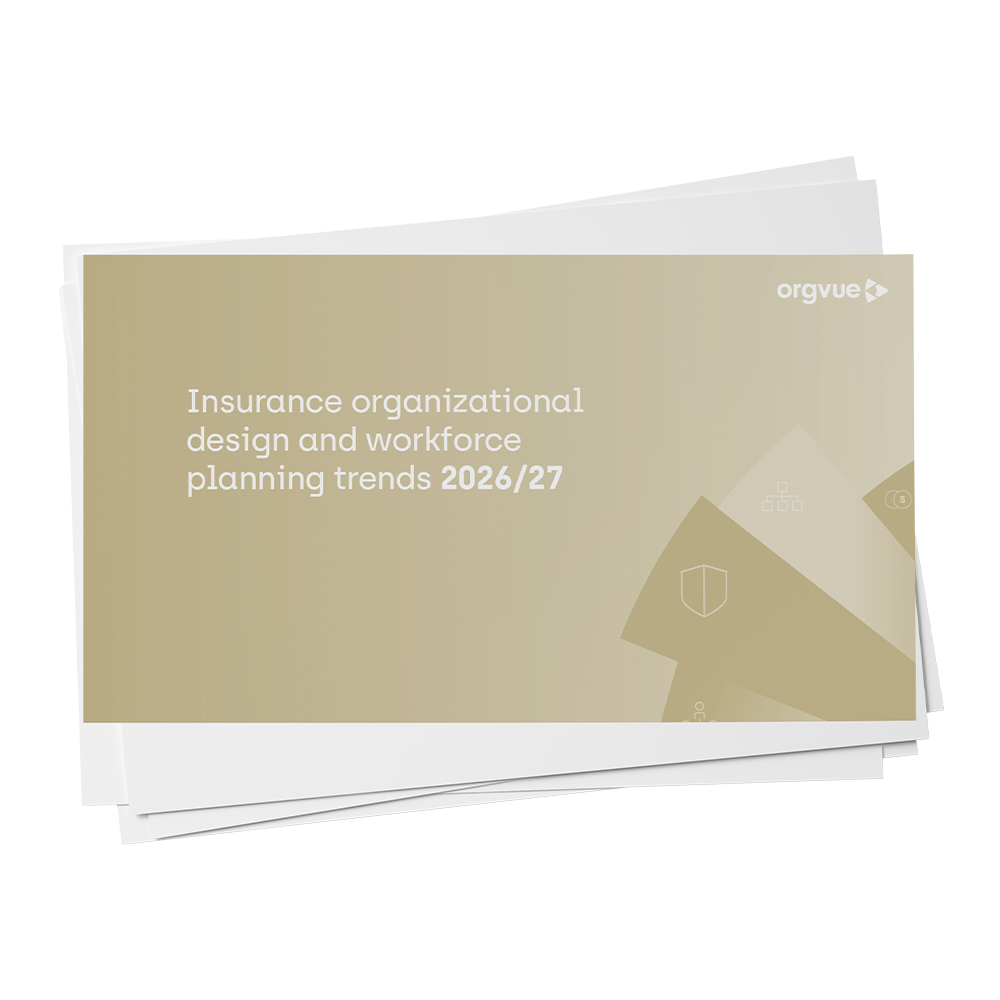
Insurance trends
Make workforce transformation continuous with Orgvue
Orgvue helps organizations move beyond one-off change and build workforce transformation as an ongoing capability. Its workforce intelligence platform, supported by advanced features and expert guidance, gives leaders the clarity to understand impact, test options, and adapt decisions over time as conditions change.
- AnalyzeSee exactly where cost, capability gaps, and transformation risk sit across your workforce
- DesignCompare future-state organization scenarios and assess impact before committing resources
- PlanUnderstand the skills you’ll need, the talent you already have, and the fastest path to readiness
- MonitorMaintain continuous workforce intelligence as demand, priorities, and conditions evolve

Simplify workforce
analysis and design
with Henshaw AI
Henshaw brings AI into Orgvue to reduce the manual effort behind key decisions. By automating time-consuming steps in workforce design, capabilities like Henshaw Assistant and Henshaw Roles help teams gain clarity and explore options sooner.
webinar
AI & Workforce Dynamics in Financial Services
A practical look at how AI is transforming work, productivity, and decision-making across financial services.

Financial services leaders in practice
Workforce decisions in financial services take many forms. Explore below to find more about how Orgvue is helping organizations in this field.
Customer transformations

How a bank redesigned its organization to improve customer experience and reduce costs

How Britam improved productivity and efficiency by understanding work

How a financial institution improved organizational effectiveness following a restructure
How Aviva integrated its workforce following an acquisition
Organizational design and
workforce planning conversations

Driving integration and alignment across functions, featuring a leader from S&P Global
Ready to see Orgvue in action?
In a personalized demo session, discover how Orgvue can help you:
- Understand workforce impacts before restructuring
- Compare multiple operating model scenarios
- Find critical skill gaps across the organization
- Align workforce plans to business strategy
- Accelerate AI workforce transformation
Trusted by global enterprises
“Orgvue’s automated role-clustering capability will save a huge amount of time in surfacing opportunities for organizational redesign, workforce planning, and cost reduction. What we’ve seen so far is truly game changing for design work.”
Stacy Anderson, Salesforce
Get your personalized demo
30-minute discovery call
Demo tailored to you
See our privacy notice. You can unsubscribe from marketing at any time by writing to us at [email protected].
Not ready for a demo? Explore more…


FAQ: Financial services workforce transformation
In financial services, workforce transformation means reshaping roles, skills, structures, and operating models so the organization can respond to changing customer expectations, digital competition, regulatory demands, and advances in AI and automation. The aim is a workforce that keeps money, data, and decisions moving while staying adaptable.
The main pressures are next-generation customers with high digital expectations, AI and automation changing how work gets done, demand for seamless and personalized banking, and continued regulatory scrutiny. Each of these affects how work is organized, which skills matter most, and how teams need to be structured.
Digital readiness programs, restructures, and regulatory remediation respond to real pressures, but they rarely create lasting advantage on their own. Building transformation as an ongoing capability lets firms keep adjusting structures, skills, and costs as customer needs, technology, and regulation change.
AI and automation are reshaping tasks across operations, customer service, risk, compliance, and advisory functions. Firms need to understand which activities can be automated or augmented, which skills will become more important, and how roles should be redesigned so productivity gains turn into real value.
A customer journey-based operating model organizes teams around end-to-end customer experiences, such as opening an account or making a claim, rather than around traditional product or functional silos. Moving to this model requires redesigning structures, roles, and accountabilities, and understanding the workforce and cost impact before making changes.
Strategic workforce planning connects workforce decisions to business priorities such as digital growth, cost targets, and regulatory requirements. It helps leaders forecast future skills and capacity needs, understand current talent supply, and find the fastest route to closing gaps.
Bringing workforce data from each business into a single view helps leaders compare structures, find duplicate roles, standardize job architecture, and understand cost implications. This supports faster, more controlled integration and a clearer future-state organization.
Analyzing which activities people spend time on, and what they cost, shows where effort is duplicated, misallocated, or ready for automation. Leaders can then redesign roles and processes to improve productivity and efficiency without losing the expertise customers rely on.
Orgvue gives financial services leaders a single view of workforce cost, capability, and structure. Teams can analyze transformation risk, compare future-state organization scenarios, plan for future skills needs, and keep monitoring workforce changes as conditions evolve.
Henshaw AI cuts the manual effort in workforce analysis and design. Henshaw Assistant answers workforce questions in plain language, and Henshaw Roles groups position data into role clusters. Together they help teams get clarity and explore organizational options sooner.