Digital workforce transformation
Make your workforce ready for the digital shifts ahead.
Trusted by global enterprises









What is digital transformation?
Digital transformation reshapes how you operate, compete, and deliver value in a world where change never slows. It reaches every part of the organization from systems and processes to how you serve customers. Technology might spark the shift, but people make it real.
Your workforce must be able to adapt, learn, and apply new ways of working. Many organizations start this journey in response to digital pressure while others build capability ahead of it. What separates them is clarity. When you understand your workforce well enough to see capacity, gaps, and options, you can adapt by design rather than necessity.
Want to know more?
The challenge of Digital Transformation
Digital transformation moves fast, but workforce clarity often lags behind. That gap creates risk whether you’re responding to immediate digital demands or building long-term capability.
Leaders face:
- Technology outpacing clear insight into workforce readiness
- Talent shortages that slow or block critical initiatives
- Disruption from AI and automation that steadily reshapes roles and workflows
- Integrating new systems and understanding workforce impacts at scale
- Fragmented data and no way to model workforce change dynamically
- Misalignment between workforce planning and complex hybrid IT environments
The result? Transformation slows and investment underdelivers.
What Orgvue enables
Digital transformation changes the conditions in which work happens, and in many cases the work itself. Orgvue helps you understand what those shifts mean for your workforce so you can make decisions with clarity. The platform connects your technology plans to roles, skills, and capacity, giving you one place to explore workforce implications, compare scenarios, and plan change over time. Whether you’re responding to urgent digital demands or shaping long-term capability, Orgvue brings HR, Finance, IT, and the business around a shared understanding of what the transformation requires.

Some of the most common use cases:

Cloud transformation
Understand how moving from on-premise to cloud or hybrid models affects roles, skills, and capacity. Plan multi-year transitions, reallocate resources, and design cloud-enabled operating models.

AI and automation
Identify work affected by automation and benchmark with industry data. Assess role and skill implications, and plan targeted upskilling or redeployment.

Skills prioritization
Combine labor market intelligence with internal data to pinpoint high-demand roles and critical gaps so CIO and CTO teams can focus reskilling and recruitment where it matters most.
Operating model redesign
See how work happens today and design future structures aligned with long-term digital investment and emerging ways of working.
features and benefits
How it works
Build a trusted data foundation
- Consolidate data from HR systems, finance tools, and spreadsheets into a single view
- Clean and align this data to create an accurate, trusted source of truth
- Bring in external labor market data to accelerate decision-making and reduce workforce risks as digital needs evolve
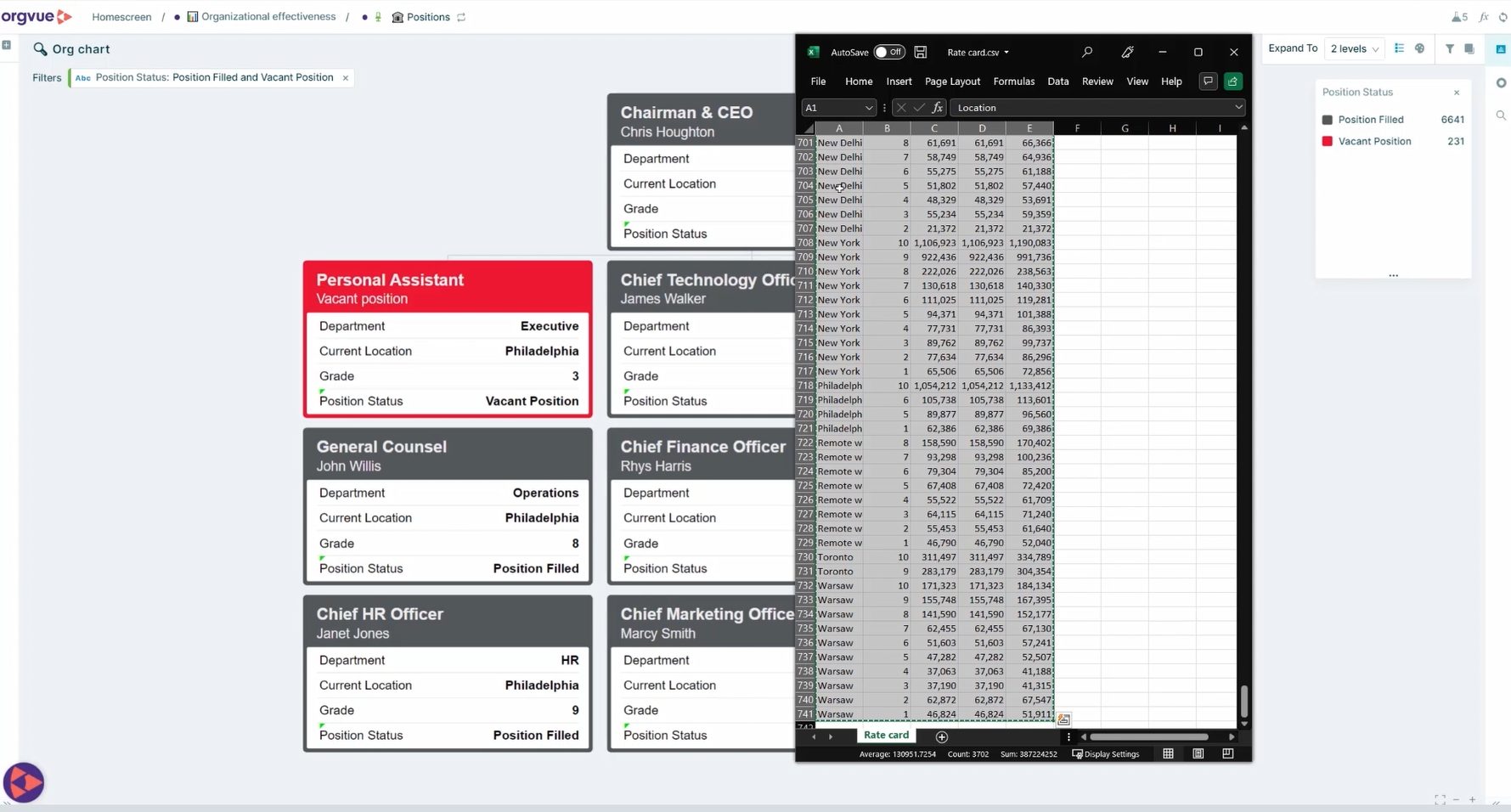
Adding rate card data from a spreadsheet to people data in Orgvue
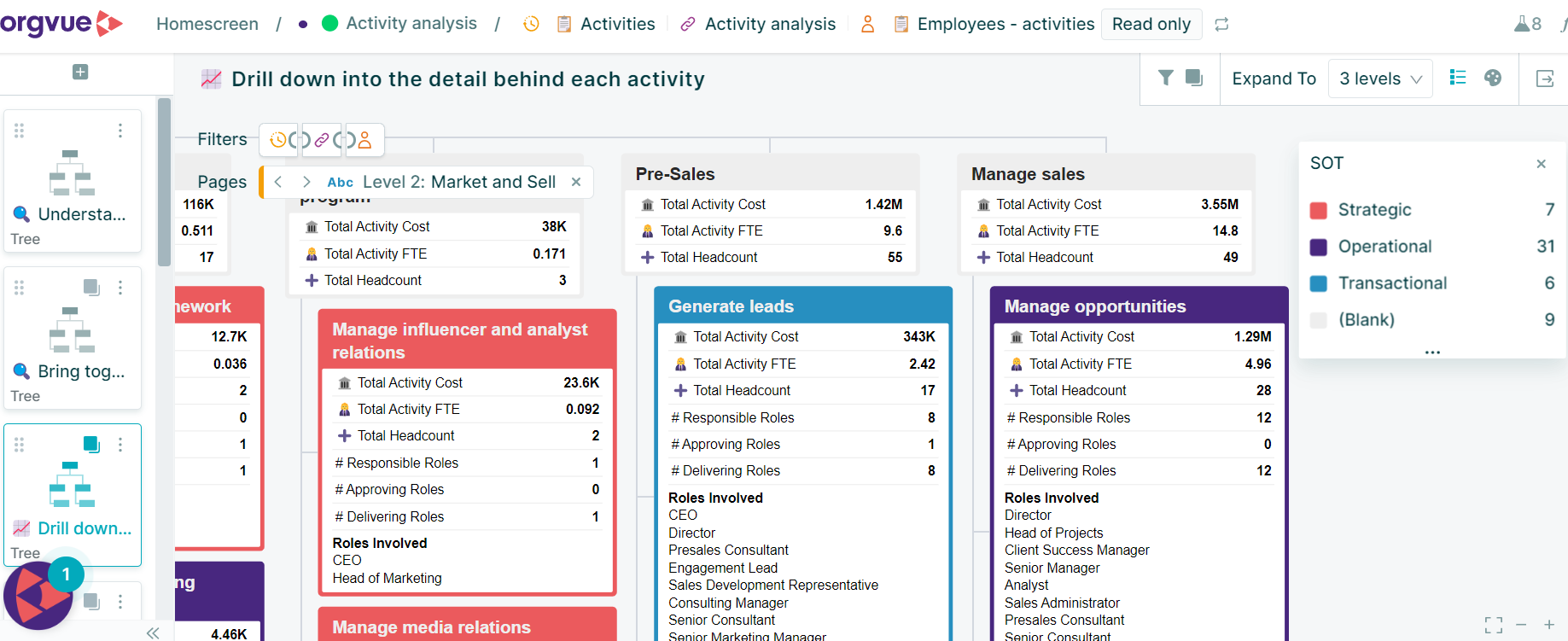
Visualizing activity details and classifying them as strategic, operational, or transactional
Understand the work and skills across your business
- See the work being done, who performs it, and the cost or effort behind it
- Identify critical skills and where they sit in the organization
- Spot gaps, shortages, and potential areas of risk as digital needs evolve
- Assess where upskilling, hiring, or redeployment may be needed
Model scenarios and design your future workforce
- Add, remove, or adjust positions to explore different workforce options
- See the impact of each change and discard scenarios that do not deliver value
- Apply criteria such as skills, performance, tenure, and activities to make data driven decisions
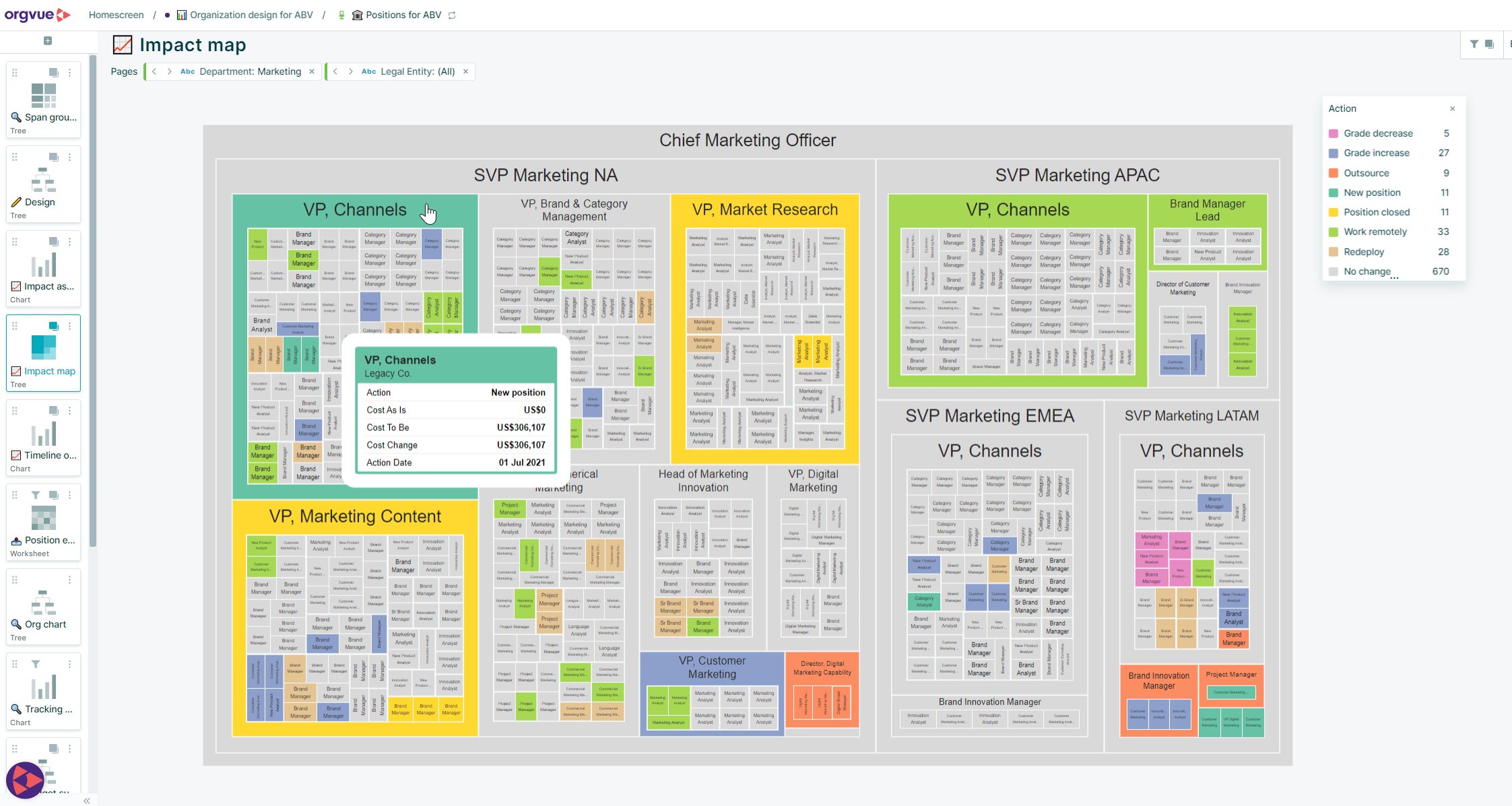
Seeing the impact of your design and where position changes were made
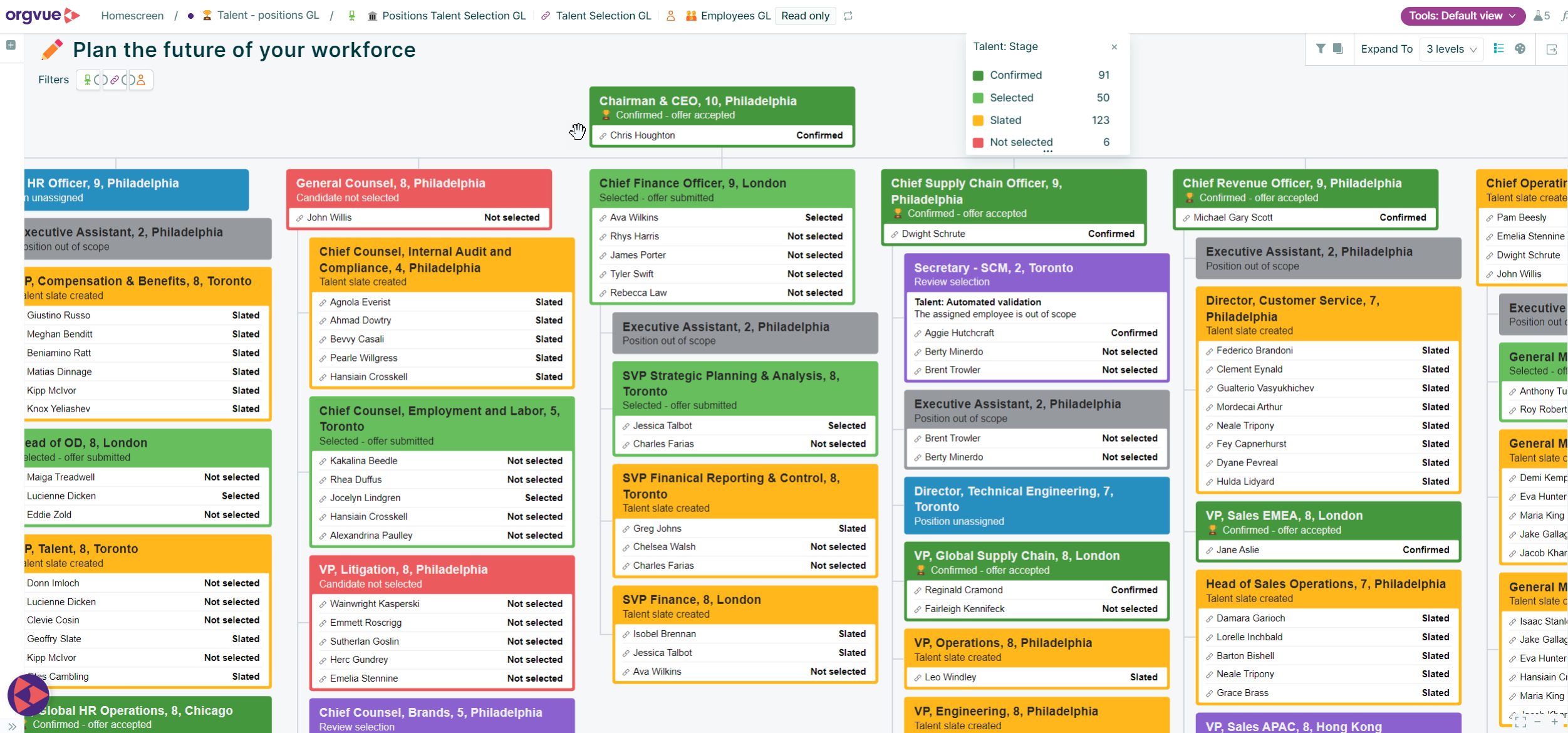
Orgvue view showing talent selection progress on the org chart
Implement your plan and allocate the right talent to your new structure
- Build talent pools by shortlisting people based on role requirements and reveal skills gaps
- Confirm the best candidates for each role once scenarios are agreed
- Manage implementation, redeployment, and any required exits after decisions are made
Monitor progress and maintain long term productivity
- Track progress against your plan and report on value delivered
- Monitor employee movement including joiners, movers, and leavers
- Iterate and re-model quickly as internal or external conditions change
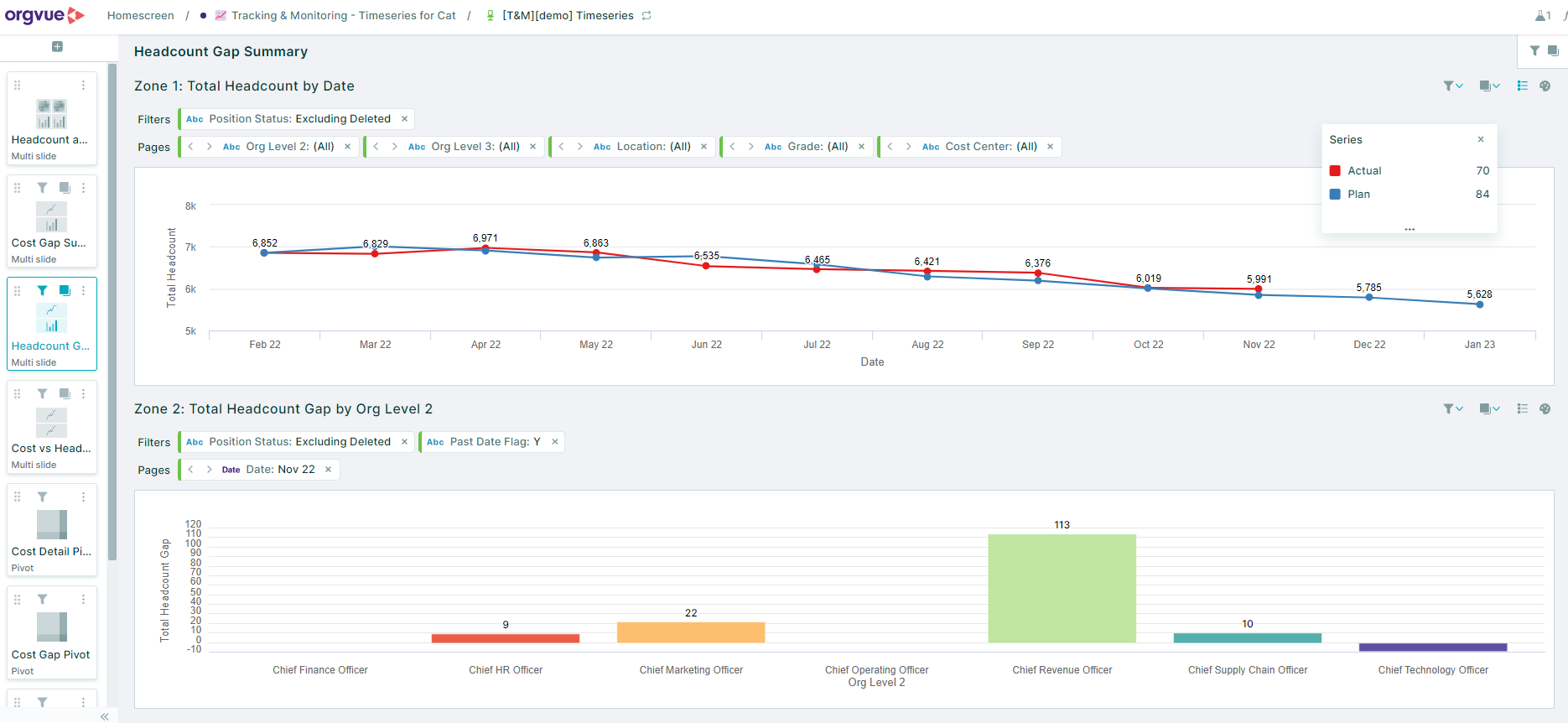
Comparing current headcount and cost against targets
Henshaw Assistant

Ask, and your data answers
Henshaw Assistant brings your data to life, giving you instant clarity on your workforce.
Ask questions like:
- Show me the departments that include digital roles
- How many people in North America have a role fit score higher than 85% for a cloud architect role?
Customer Story
Addressing talent gaps and digitalisation through Strategic Workforce Planning
For the first time, we’re confident we can get the right workforce to meet the strategic objectives for the next 5 years, moving beyond quick fixes to a real long-term sourcing strategy.
Head of Workforce Planning
Ready to see Orgvue in action?
In a personalized demo session, discover how Orgvue can help you:
- Understand workforce impacts before restructuring
- Compare multiple operating model scenarios
- Find critical skill gaps across the organization
- Align workforce plans to business strategy
- Accelerate AI workforce transformation
Trusted by global enterprises
“Orgvue’s automated role-clustering capability will save a huge amount of time in surfacing opportunities for organizational redesign, workforce planning, and cost reduction. What we’ve seen so far is truly game changing for design work.”
Stacy Anderson, Salesforce
Get your personalized demo
30-minute discovery call
Demo tailored to you
See our privacy notice. You can unsubscribe from marketing at any time by writing to us at [email protected].
Not ready for a demo? Explore more…


FAQ: Digital transformation
Digital transformation is the process of using technology, data, and new ways of working to improve how an organization operates, serves customers, and creates value. While technology often drives the change, success ultimately depends on people, skills, and the organization’s ability to adapt.
Many digital transformation programs struggle because organizations focus on technology without understanding workforce impacts. Common challenges include skills shortages, unclear workforce readiness, fragmented data, resistance to change, and a lack of alignment between business strategy, technology investments, and workforce planning.
Orgvue connects workforce, skills, financial, and organizational data in a single platform. This gives leaders visibility into workforce readiness, skills gaps, role impacts, and future workforce requirements so they can model scenarios, prioritize investments, and make more informed transformation decisions.
Preparing for digital transformation starts with understanding current workforce capabilities and identifying the skills required for the future. Organizations need visibility into existing skills, emerging capability gaps, workforce demand, and potential reskilling opportunities so they can build the talent needed to support long-term transformation goals.
AI and automation are changing how work gets done across every industry. Some activities can be automated, while new roles and skills emerge. Organizations need to understand which work is most affected, where skills gaps may develop, and what reskilling or redeployment strategies are needed to ensure a successful workforce transformation.
Skills are often the biggest constraint on successful digital transformation. New technologies frequently require capabilities that do not exist at sufficient scale within the workforce. Identifying critical skills, understanding future demand, and prioritizing targeted reskilling initiatives help organizations build sustainable digital capability.
By combining workforce data, skills intelligence, labor market insights, and business requirements, organizations can compare current capabilities against future needs. This helps leaders identify which skills are in short supply, where they exist within the organization, and whether hiring, redeployment, or reskilling is the best response.
Orgvue helps organizations understand how cloud adoption affects roles, skills, workforce structures, and operating models. Leaders can assess workforce impacts, identify capability requirements, model future-state scenarios, and plan workforce transitions that support long-term cloud transformation strategies.
Yes. Orgvue enables organizations to model workforce and organizational scenarios before implementing change. Leaders can test different workforce structures, role changes, skills strategies, AI adoption plans, and operating models to understand impacts, compare options, and make decisions with greater confidence.